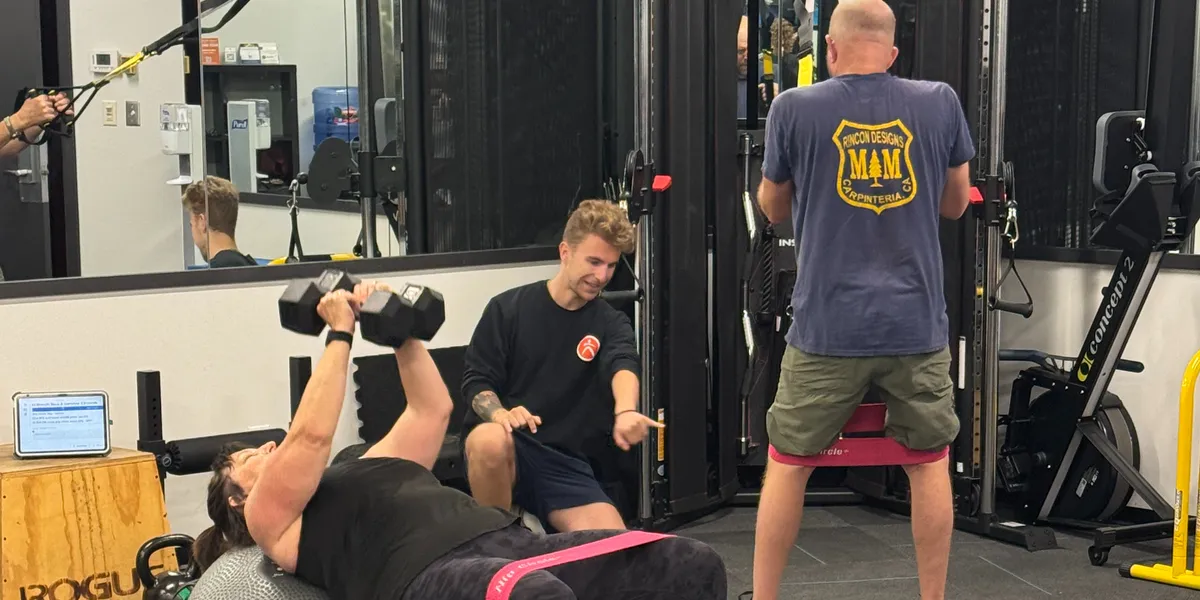
Strength Training Over 40, 50, and 60: Why Getting Stronger Matters More With Age
Getting Stronger Doesn't Have an Age Limit
Have you noticed that activities that once felt easy now require a little more effort? Maybe carrying groceries feels harder, getting up from a low chair takes more work, or recovering after a long day isn't as easy as it used to be.
These changes can happen gradually. But they don't mean you have to accept feeling weaker as you get older.
Strength training over 40, 50, and 60 can help you maintain muscle, improve physical function, and stay capable of doing the things you enjoy.
Whether you're returning to exercise after years away or have been active your entire life, the right training program can help you build strength at your own pace.
At Quinntessential Fitness (QfitU), we believe fitness should support your life outside the gym. That means developing strength, moving with greater confidence, and creating a routine you can maintain over time.
Why Strength Training Becomes More Important After 40
As we age, our bodies naturally change. Muscle mass and strength can decline over time, particularly when we aren't physically active. Changes in mobility, balance, and recovery may also influence how we approach exercise.
The good news? Age alone doesn't determine what you're capable of achieving.
Resistance training challenges your muscles in a controlled way, helping you maintain and build strength when the program matches your ability and progresses appropriately.
Here are four important reasons to make strength training part of your routine.
1. Maintain Muscle and Build Strength
Muscle plays an important role in everyday movement. You use it when climbing stairs, lifting objects, getting out of a chair, and carrying things around your home.
Regular strength training helps preserve muscle and can increase strength at different ages.
You don't need to start with heavy weights or complicated exercises. Bodyweight movements, resistance bands, machines, and dumbbells can all be useful options.
What matters most is choosing appropriate exercises, learning proper technique, and gradually challenging yourself as your strength improves.
2. Support Mobility and Everyday Movement
Strength and mobility work together.
When your muscles are stronger and your joints can move through the ranges needed for daily activities, tasks such as bending, reaching, walking, and standing up may become easier to manage.
A well-rounded program can combine resistance exercises with mobility work tailored to your needs.
The goal isn't to perform the most complicated movements. It's to build the physical capacity to move comfortably and confidently in everyday life.
3. Improve Balance and Physical Confidence
Balance is an important part of staying active as we age.
Strength exercises that develop the legs, hips, and core can support the physical abilities involved in maintaining balance. Depending on your needs, a program may also include specific balance exercises and controlled movements.
This can be particularly valuable if you've become less confident with stairs, uneven surfaces, or activities that require coordination.
If you have a history of falls, significant balance difficulties, or a medical condition affecting movement, seek guidance from an appropriate healthcare professional before beginning challenging exercises.
4. Stay Independent and Active
Think about the activities you want to continue doing over the next five, ten, or twenty years.
Perhaps you want to travel, play with your grandchildren, enjoy outdoor activities, garden, or simply move around your home without feeling limited by everyday tasks.
Strength training can help develop the physical capacity these activities require.
Instead of focusing only on how your body looks, consider what you want your body to be able to do.
That shift can make fitness more meaningful at every age.
Strength Training Over 40: Build a Strong Foundation
Your 40s can be an excellent time to establish consistent strength training habits, whether you're new to exercise or returning after a break.
You may have work, family responsibilities, and other commitments competing for your attention. An effective program should fit your life rather than leave you exhausted and struggling to keep up.
Focus on these priorities:
Learn proper technique. Understand how to perform exercises with controlled, comfortable movements.
Train your major muscle groups. Include exercises for your legs, hips, back, chest, shoulders, arms, and core.
Progress gradually. Increase resistance, repetitions, or exercise difficulty as your ability improves.
Make recovery part of the plan. Allow time between challenging sessions and pay attention to sleep, energy, and soreness.
Build consistency. A manageable routine you follow regularly is more useful than an intense program you cannot sustain.
If you're just starting, you don't need to overhaul your entire lifestyle at once. Begin with a realistic schedule and build from there.
Strength Training Over 50: Focus on Strength, Function, and Consistency
Your 50s can bring changes in energy, recovery, and physical comfort. For some women, menopause can also contribute to changes in body composition and bone health.
These changes may affect how you approach training, but they don't mean you should stop challenging your body.
Strength training over 50 can help you work toward maintaining muscle, improving strength, and supporting everyday function.
Consider the following:
Choose exercises that match your current ability. You may benefit from machines, dumbbells, resistance bands, or supported movements while developing strength and confidence.
Pay attention to movement quality. Good technique helps you perform exercises with better control and makes it easier to adjust when something doesn't feel right.
Train for your real-life goals. If climbing stairs feels difficult, lower-body strength may be a priority. If carrying shopping bags is challenging, your program can address the strength needed for lifting and carrying.
Adjust when necessary. Some days you'll feel ready to do more. Other days, a lighter session or additional recovery may be appropriate.
The objective is to keep moving forward without treating every workout as a test of how hard you can push yourself.
Strength Training Over 60: Train for Strength and Independence
Your 60s are not a reason to stop building strength.
In fact, maintaining physical function becomes especially valuable when you want to remain active, independent, and involved in the activities that matter to you.
Strength training over 60 should reflect your current fitness level, health history, mobility, and goals. Someone who has exercised consistently for decades may need a different program from someone beginning for the first time.
A thoughtful program may include:
Sit-to-stand exercises to practice a movement used throughout the day.
Supported squats or other lower-body exercises suited to your ability.
Resistance exercises for the back, chest, shoulders, and arms.
Controlled stepping and balance activities when appropriate.
Mobility work to support the movements you need for daily activities.
You don't have to lift the heaviest weights in the gym to make progress.
You need exercises that challenge you appropriately, guidance when needed, and a plan that can adapt as your ability changes.
If you have osteoporosis, joint replacements, cardiovascular concerns, or other health conditions that affect exercise, consult your healthcare professional about any necessary precautions.
What Does a Good Strength Training Routine Look Like After 40?
A good routine isn't defined by how tired you feel when you finish. It's defined by whether it helps you work toward your goals safely and consistently.
For many adults, a practical starting point is two or three strength training sessions per week, adjusted to individual ability and recovery. Public health guidelines recommend muscle-strengthening activities involving all major muscle groups on at least two days each week.
A session might include:
A warm-up: Gentle movement to prepare for the workout.
Lower-body exercises: Movements such as sit-to-stands, squats, or leg presses, depending on your ability.
Upper-body exercises: Suitable pushing and pulling movements.
Core and stability work: Exercises selected for your current needs.
A gradual cool-down: Easy movement and any appropriate mobility work.
Start with manageable resistance and a level of effort that allows you to maintain control. Increase the challenge as you become stronger.
Cardiovascular activity, balance work, and flexibility exercises also have a place in a well-rounded fitness routine. Your exact combination will depend on your goals and current health.
Common Strength Training Mistakes to Avoid
You don't need a perfect workout plan to get started, but a few common mistakes can make progress harder.
Doing too much too soon. Starting with intense workouts or heavy weights can make it difficult to recover and stay consistent. Build gradually instead.
Ignoring proper form. Rushing through repetitions or using weights that are too challenging can compromise movement quality. Learn the exercise before increasing the load.
Following a random routine every session. Without a consistent plan, it can be difficult to track progress or know when to increase the challenge.
Comparing yourself with younger gym members. Your training should reflect your body, experience, and goals. Someone else's workout is not the standard you need to meet.
Giving up because progress feels slow. Strength develops through repeated effort over time. Focus on improvements in control, confidence, and daily function as well as changes in weight or appearance.
Why Coaching Can Make a Difference
Starting strength training can feel intimidating, especially if you haven't exercised in years or aren't sure which movements are appropriate for you.
A qualified fitness professional can help you learn proper technique, choose appropriate exercises, and develop a structured program based on your goals.
They can also help you track progress and adjust your training as your strength and confidence improve.
At QfitU, the focus is on guided movement, structured strength training, and intentional recovery. The aim is to help adults develop a more confident, sustainable approach to fitness.
Getting Older Doesn't Mean Getting Weaker by Default
You can't stop the passage of time, but you can take steps to support your strength, mobility, and physical function.
Whether you're exploring strength training over 40, over 50, or over 60, you can start with the ability you have today and work toward becoming stronger.
You don't need to train like someone else. You need a plan that makes sense for you.
Ready to build a stronger foundation?
At Quinntessential Fitness, we help adults approach fitness with structure, guidance, and a focus on long-term progress.
Inquire now to learn more about our training approach and find out how to get started.
Frequently Asked Questions
Is it too late to start strength training after 40?
No. Adults can build strength at different ages, including when starting for the first time in their 40s, 50s, or 60s. Begin with exercises that match your current ability and progress gradually.
How often should adults over 40 strength train?
Many adults can work toward two or more strength training sessions per week, depending on their fitness level, schedule, and recovery. 2-3 sessions per week is an ideal schedule, but don’t let “ideal” discourage you. Starting with 1 session per week is a great place to begin!
Can you build muscle after 50 or 60?
Yes. Muscle and strength can improve with appropriately designed resistance training at these ages. Results vary according to training, nutrition, health, and consistency.
Is strength training safe for adults over 60?
Absolutely. Strength training can be appropriate for many older adults when exercises, resistance, and progression are matched to their abilities and health needs. Those with medical conditions or significant mobility concerns should seek suitable professional guidance.
Do I need a personal trainer to start strength training?
Not necessarily. However, a qualified trainer can help you learn proper technique, choose suitable exercises, and build a structured program, particularly if you're new to exercise or unsure how to begin.
